Forum scholars have continued to meet year round to assess the state of bioethics, highlight topics and areas of interest, and collaborate on research. There are several projects underway. We have an animal ethics piece in the drafting phase. Other issues on the table include best practices for disclosing medical information to patients, critical psychiatry, prenatal drug testing in states with punitive fetal endangerment laws, gene editing, rights to refuse and autonomy, and the use of AI in mental health. Michael Saadeh and the group that authored a piece on automation complacency and clinical decision AI tools have a plethora of follow-up issues, including AI in clinical pathways and potential knowledge and talent degradation, each worthy of a paper or project.
David N. Hoffman authored a chapter called Bioethics and AI: How Bioethics Is Different in the Springer AI & Ethics Handbook (edited by Larry Medsker). Hoffman writes categorizing AI is crucial to assessing its ethical deployment in healthcare. “Bioethical guardrails” must ensure that the standard of care is not compromised. He notes that the use of systems trained on static data may be more easily ethically justified as he has concerns about the ability of practitioners to access and validate large, dynamic datasets and unexplainable AI systems. Separately he notes the distinction between clinical decision support tools and tools that are likely to substitute for practitioner expertise, the latter calling for more rigorous ethics oversight. This tends to track the FDA’s framework distinguishing clinical decision support systems from software as a medical device, which calls for premarket approval and significant oversight. When it comes to AI in clinical treatment, he also tracks the spirit of the FDA’s requirement that to qualify as exempt clinical decision support tools, systems must “provide the basis of recommendation”: “Saying that an AI algorithm is merely a decision support tool assumes the clinician can determine all inputs that led to the AI recommendation.” David’s publication highlights the role of the forum in connecting authors with editors, publishers, and opportunity and the value of discussions fleshing out ideas, albeit with members’ unique voices, policy positions, and concerns.
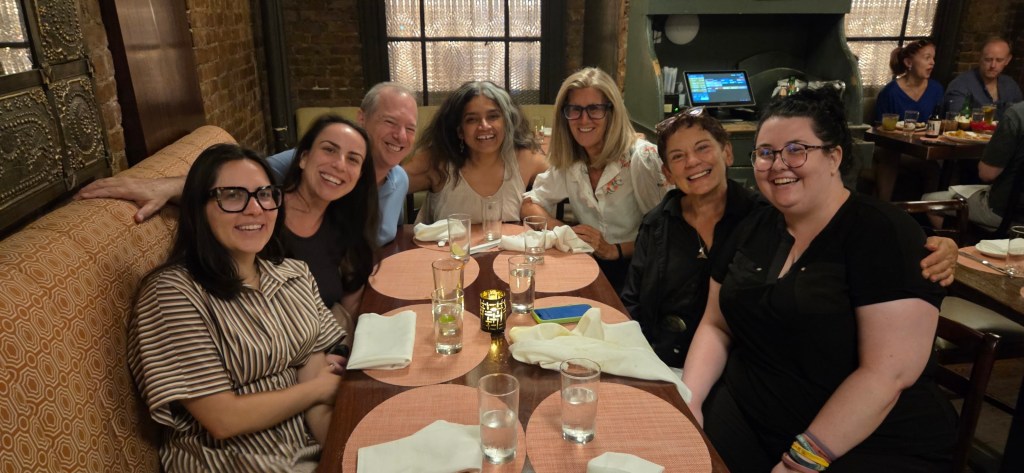
Several forum members and members of the Columbia University community got together in June to honor Innovative Bioethics board member Meryl Selig, who died of multiple myeloma in March. Her grace and humor contributed to our community exponentially. She was a dear friend to many of us. We admired her courage and wit in the face of adversity. We recognize and will carry on her mission of trying to improve the lives of patients and the public through promoting best practices, wellness, and opportunity.


Leave a comment